
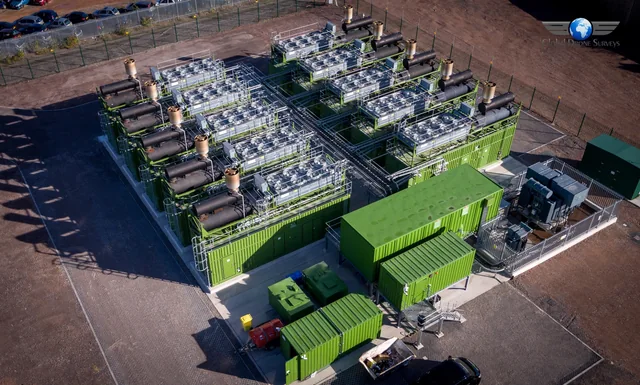
Utilities
Assessing counter-UAS security arrangements for energy, water and nationally important infrastructure.
Your organisation has invested in Counter-UAS technology. But has its effectiveness been independently validated?
Global Drone Surveys assesses detection systems, operational readiness and security response through confidential, authorised testing.
Global Drone Surveys is led by directors whose professional backgrounds include military operations, national resilience and international UAV threat simulation within the defence sector. Our leadership team brings experience of working on sensitive projects and within security-controlled environments.
This experience provides a practical understanding of realistic drone threats, operational decision-making and security response. Relevant personnel suitability and access requirements can be discussed through appropriate client assurance procedures, where disclosure is authorised.
Assessing counter-UAS security arrangements for energy, water and nationally important infrastructure.

UAV threat assessment and operational assurance for ports, harbours, shipping terminals and critical logistics facilities.

Security testing and operational assurance for sporting venues, stadium operators and major arenas.

UAV risk assessment and preparedness reviews for concerts, festivals, major gatherings and temporary event locations.

Discreet counter-UAS security assessment and preparedness support for high-profile individuals, private venues and fixed locations.
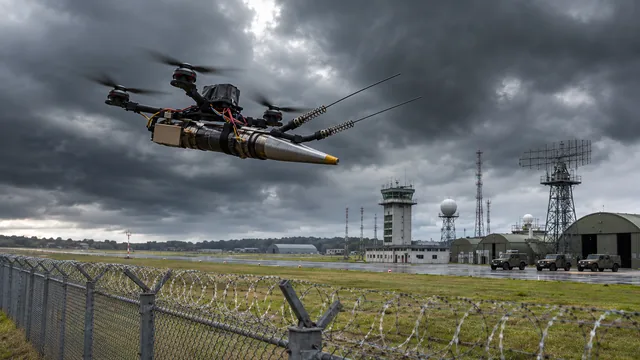
Specialist operational assurance for authorised defence, government and security-sensitive environments.
Detecting a drone is only the first stage of an effective Counter-UAS response.
An alert must be recognised, assessed and communicated to the appropriate personnel before an informed and lawful response can take place.
Global Drone Surveys examines this complete operational sequence, from initial detection and alert acknowledgement through to reporting, escalation, decision-making and incident recording.
Controlled exercises and operational reviews help identify weaknesses in procedures, staff readiness and coordination, ensuring that existing detection technology is supported by an effective and proportionate security response.
Review protective measures, detection arrangements, procedures, operational responsibilities and security requirements.
Validate installed detection and alerting arrangements against agreed scenarios. Any live exercise is planned under written site authority, aviation requirements and safe systems of work.
Evaluate decisions, escalation and coordination through controlled exercises or tabletop simulation. Live flying and any mitigation activity take place only when separately lawful, authorised and appropriate.
Effective Counter-UAS testing goes beyond confirming that a detection system generates an alert. It establishes how existing technology, personnel and operational procedures perform together under controlled conditions.
Global Drone Surveys assesses installed Counter-UAS capabilities, which may incorporate radio frequency (RF) detection, radar, electro-optical and infrared (EO/IR) sensors, acoustic detection or integrated multi-sensor systems.
Testing examines relevant aspects of detection performance, including detection consistency, alert accuracy, notification times, sensor limitations and the effectiveness of information presented to operators.
Alongside the technical assessment, GDS audits personnel performance against the client’s established standard operating procedures (SOPs), examining whether alerts are correctly acknowledged, assessed, reported and escalated in accordance with existing instructions and defined responsibilities.
Controlled exercises evaluate both system performance and procedural compliance, identifying potential gaps in equipment capability, operator awareness, decision-making and operational response.
Findings are documented against agreed test objectives and existing procedures, providing clients with evidence-based observations, identified limitations and recommendations for corrective action, further training or procedural improvement.
For wider commercial asset requirements, explore our Industrial & Infrastructure Drone Inspections services.
We assess operator preparedness, training, incident reporting and coordination with police or command structures where relevant. Our findings show whether personnel and procedures can deliver the intended response after a UAV threat is detected.
We agree objectives, written site authority, relevant airspace and aviation requirements, responsibilities, safety arrangements and information handling before testing. CAA Open Category registration alone does not authorise restricted airspace access, specialist mitigation or other activities requiring separate permission.
Depending on scope, a confidential report may include:
Our leadership team brings experience of working on sensitive projects and within security-controlled environments. Relevant personnel suitability and access requirements can be discussed through appropriate client assurance procedures, where disclosure is authorised.
Discuss your security requirementsExplore pages from a fictional stadium assurance demonstration showing the structure of a confidential client report.
View Example ReportFictional demonstration only. No real venue, customer engagement or operational test is represented. Select a panel for a larger view or open the full report.
Installing equipment provides a potential detection capability. Independent testing examines whether it performs in the intended environment and whether people and procedures respond effectively to its alerts.
Yes. We can agree a proportionate assessment of installed detection, alerting, operator acknowledgement and escalation arrangements. The method depends on the site, equipment and permissions.
It reviews the whole detection-to-response process: technology, responsibilities, decisions, handovers, incident records and corrective actions. The assessment scope is agreed with the client in advance.
Yes. Interviews, procedure reviews, system records, simulations and tabletop exercises can reveal gaps. A live exercise is considered only where it is lawful, safe and separately authorised.
Requirements depend on the location and activity. Written site authority, airspace assessment, flight permissions where needed, safety controls and stakeholder coordination are considered before a live test. CAA Open Category registration does not by itself authorise specialist Counter-UAS activities.
Depending on scope, the confidential report can cover methodology, system and procedural observations, detection-to-response findings, limitations, a findings register and prioritised corrective actions.
Potentially, subject to site suitability, permissions, access requirements and a mutually agreed scope. Personnel suitability and information-handling requirements can be discussed through the client’s assurance process.
Use the consultation form below to outline the type of site and a general objective. Please do not include sensitive coordinates, system details or vulnerabilities in the initial enquiry.
Discuss your security requirements with our team in confidence. We will provide a discreet initial discussion to explore the most appropriate assessment approach for your site, event or organisation.
Please avoid sensitive coordinates, system details or vulnerabilities in this initial enquiry.